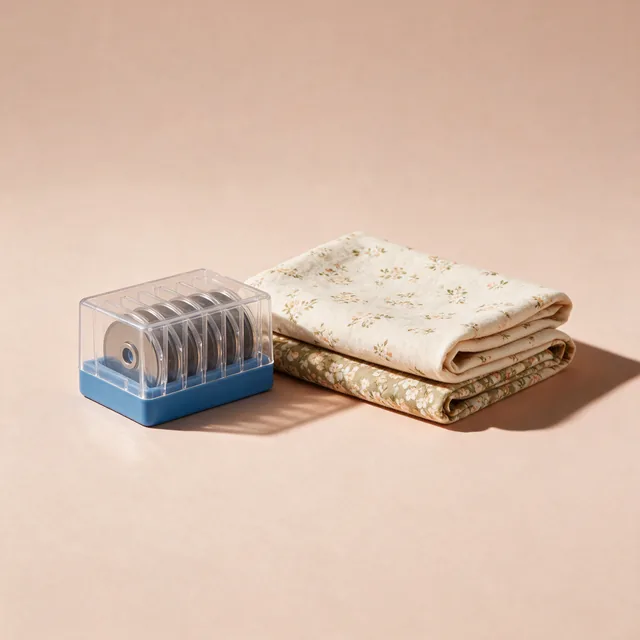
Rotary cutter blades, in a multipack
Blunt blades are the commonest cause of inaccurate cutting and people run them far too long. A pack of spares is cheap and immediately used.
Some links on this page go to Amazon. If you buy through one we earn a small commission, at no extra cost to you. It never changes what we recommend or the order we put things in. Photographs here are illustrations of the kind of thing described, not pictures of a particular product.
Where accuracy is won or lost.
Blunt blades are the commonest cause of inaccurate cutting and people run them far too long. A pack of spares is cheap and immediately used.
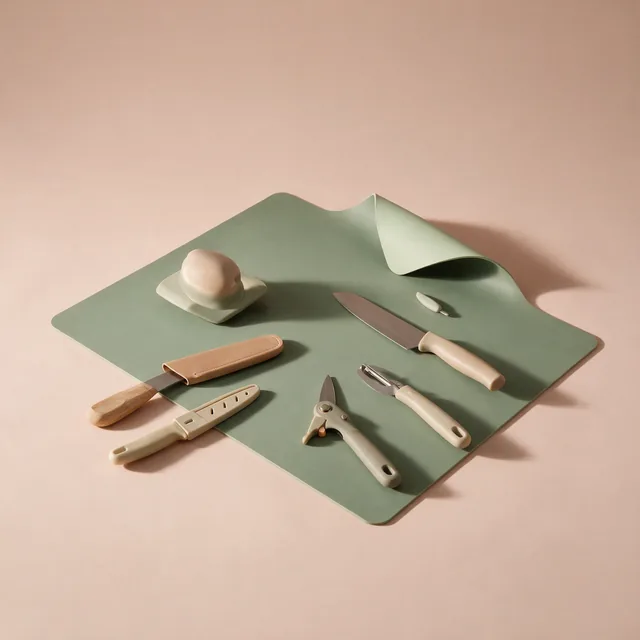
Most people work on a mat that is too small and cut in stages, which introduces error. A big mat is awkward to buy and wonderful to receive.
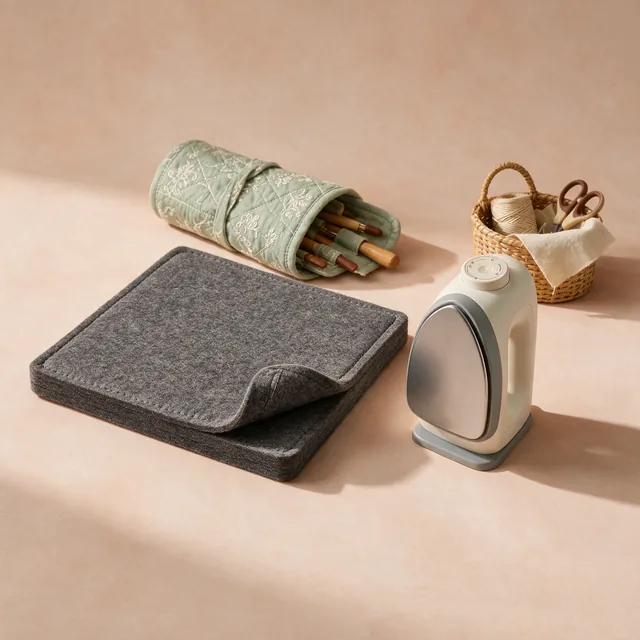
Pressing, not ironing, is what makes seams lie flat. A wool mat reflects heat back through the fabric and makes a real difference to quilt blocks.
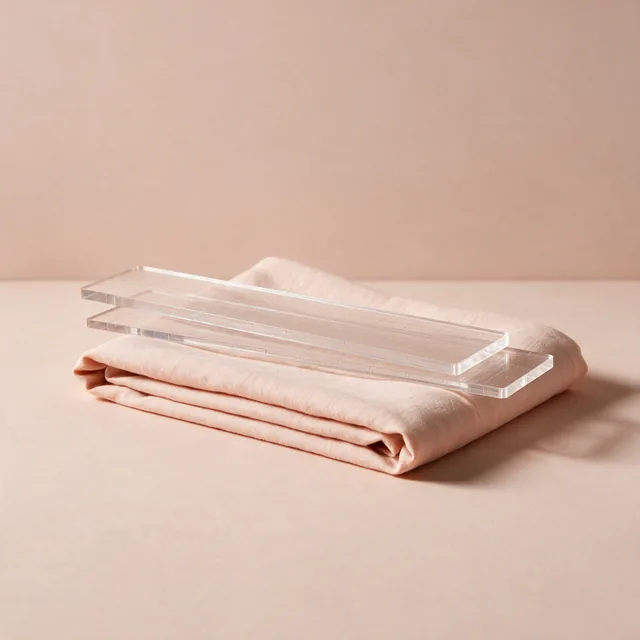
Rulers with clear markings and a non-slip backing turn cutting into something repeatable. Anyone who has had a ruler slip mid-cut knows the value.
Light, height and somewhere to leave a project.
Matching thread and seeing dark fabric under household bulbs is guesswork. A clamped daylight lamp is the single best improvement to an evening of sewing.
Supporting the weight of a quilt while sewing prevents drag and wavy seams. Check the machine model before buying.
A place for the cut pieces, the pattern and the matching thread of one project. It is what makes coming back to a half-finished thing possible.
Blocks stick to flannel without pins, so a quilt can be arranged and looked at before it is sewn. Cheap and it changes how people design.
The small things and the skills.
Cheap thread sheds lint and breaks. A few cones of quality thread in neutral colors is a consumable gift that is always welcome.
Needles should be changed far more often than they are, and the right type matters for knits, denim and quilting. A variety pack removes the excuse.
Zips, curved seams, free motion quilting. A class turns an avoided technique into an option, which opens up new projects.
Lets them buy the right fabric in the right quantity for the project they are actually planning. It is the honest version of buying fabric.
The parts of a project that decide how it looks.
The two feet that transform machine quilting and piecing accuracy.
Chalk, air-erasable pens and a hera marker. Cheap and used on every project.
Faster, safer and they do not distort thick seams. Everyone who tries them switches.
The tool used most and always the worst in the box. An ergonomic one is a kindness.
Pressing curves properly is what makes clothes look finished.
Nobody has enough and winding over a half-full one is a small daily annoyance.
A serious gift that changes how clothes are fitted.
For hand quilting. It keeps tension even, which is most of the finish.
Put in the date and see how long you have, and the last sensible day to order each kind of gift.
We'll remind you about a month ahead, which is enough time to ask what they are making before you buy for it.
Fabric is the obvious gift and the one most likely to sit unused. Quilters and sewists buy fabric for a specific project in a specific quantity, and a beautiful piece with no plan attached becomes stash rather than a gift.
The tools, though, are wide open. Cutting, pressing and marking equipment wears out, gets blunt, or was never bought properly in the first place, and better versions make a visible difference to the finished work.
The other winning category is anything that makes a sewing space work: light, a surface at the right height, and somewhere for the pieces of a project to live between sessions.
Usually not. Fabric is bought for a specific project in a specific yardage, and a piece without a plan becomes stash. A gift card to the shop they use achieves the same thing without the guesswork.
A large cutting mat, spare rotary blades or a wool pressing mat. All three improve accuracy, all three are used on every project, and none of them depends on the colors they like.
Rotary blades and machine needles. Both are cheap, both should be changed far more often than they are, and both quietly ruin the quality of the work when they are past their best.
Only with their involvement. Machines are chosen for the kind of sewing someone does, and features that matter to a quilter are irrelevant to someone making clothes.