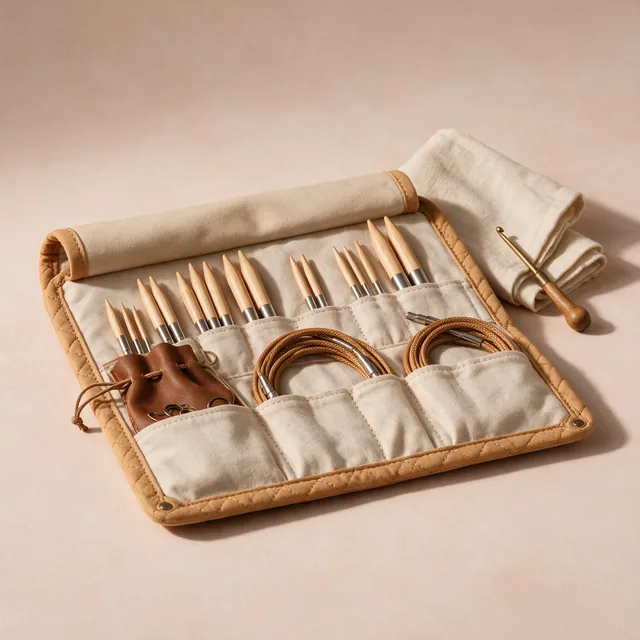
An interchangeable circular needle set
Replaces a drawer of single needles with tips and cables that combine into any size. It is the gift a serious knitter would eventually buy and keeps putting off.
Some links on this page go to Amazon. If you buy through one we earn a small commission, at no extra cost to you. It never changes what we recommend or the order we put things in. Photographs here are illustrations of the kind of thing described, not pictures of a particular product.
Bought once, used for decades.
Replaces a drawer of single needles with tips and cables that combine into any size. It is the gift a serious knitter would eventually buy and keeps putting off.
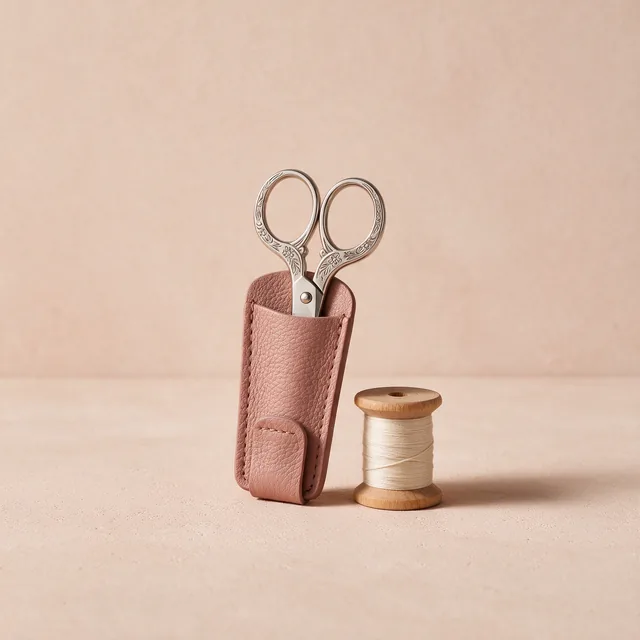
Craft scissors get stolen by the rest of the household. A good small pair plus a pendant cutter for travel solves a genuinely daily annoyance.
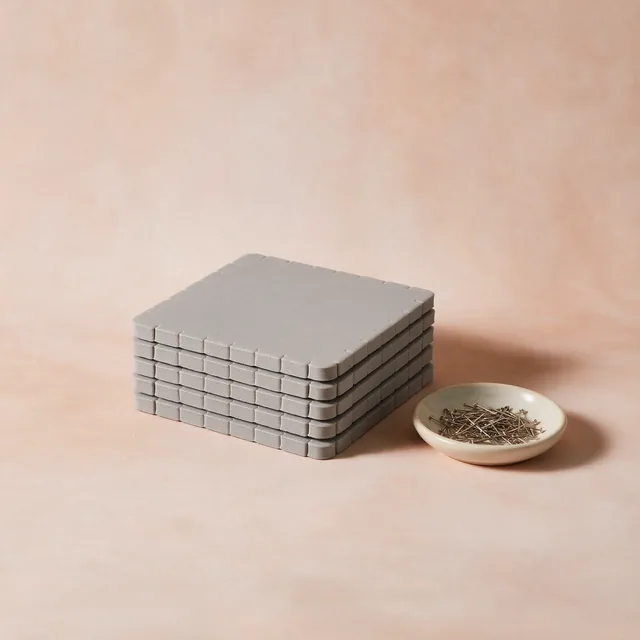
Blocking is what makes handmade pieces look finished rather than homemade, and most people improvise it on a towel. Foam mats and rustproof pins are cheap and transformative.
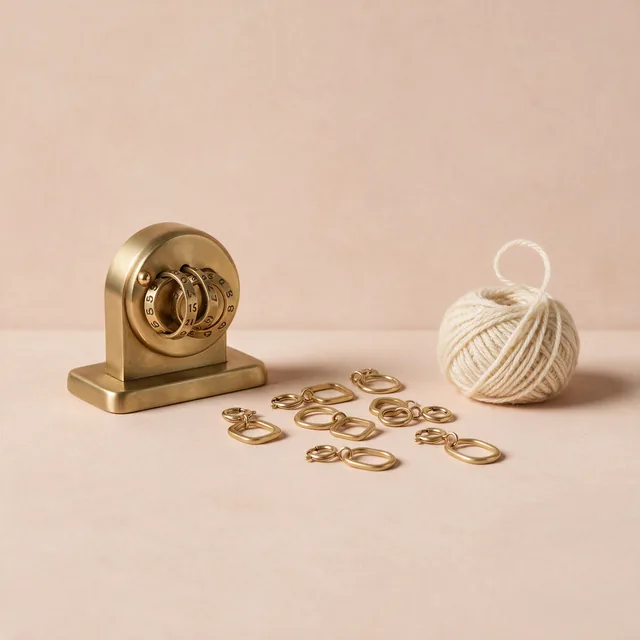
Tiny, constantly lost, and never bought in sufficient quantity. Buy more than seems reasonable, because they will all be used.
The gifts that add hours to a hobby.
Dark yarn and fine stitches in evening light are what stop people crafting. A good daylight lamp on an arm makes winter evenings usable again.
Keeps one project and its tools together and portable. Makers run several projects at once, so a second and third bag are as welcome as the first.
Clear, moth-proof boxes protect a collection worth more than most people admit. Unglamorous, and it prevents a genuinely upsetting loss.
Turns hand-wound skeins into neat center-pull cakes in a minute. Anyone who has spent an evening untangling a hank knows exactly why this is on the list.
Ways to give the craft without guessing the project.
They will pick a weight, color and quantity that matches a real plan. It looks like less thought and produces a much better outcome.
Colorwork, steeking, spinning, sock heels. A class gives a skill and an afternoon, and it is the gift most likely to be talked about afterward.
Feeds the part of the hobby that never runs out. Choose a designer whose work they already follow rather than a general collection.
Arrives regularly, carries patterns and technique articles, and is read cover to cover. It suits people who like the reading half of a craft as much as the making.
The end of a project and how it travels.
Weaving in ends is the last job and the needles are always lost.
Stops the ball rolling across the room. A small pleasure, used every session.
Gauge decides whether a garment fits. Cheap and constantly needed.
Hand-knits need proper washing or they felt. A bottle lasts years.
Physical counters beat apps because they survive being put down mid-row.
For anyone making socks or shawls. It is the finishing tool that makes work look professional.
Small projects go everywhere. A bag that hangs off a wrist is genuinely used.
A reference rather than a pattern book. It gets used across every future project.
Put in the date and see how long you have, and the last sensible day to order each kind of gift.
We'll remind you about a month ahead, which is enough time to ask what they are making before you buy anything for it.
The rule with knitters is that yarn is the obvious gift and the wrong one. Yarn is chosen for a specific project at a specific weight, and a beautiful skein with no plan attached usually sits in a basket for years.
What works instead is everything around the yarn: the tools, the light, the storage, and the time. Makers accumulate projects far faster than they accumulate the things that make working on them comfortable.
If you do want to buy yarn, buy a gift card to the shop they actually use, or go with them. It is less romantic and it is what they would ask for if asking were easier.
Usually not. Yarn is chosen for a specific pattern at a specific weight and quantity, and one skein of something lovely rarely has a project it can be used for. A gift card to the shop they use is the safer version of the same gesture.
An interchangeable circular needle set if they do not have one, and a daylight lamp if they do. Both are used on every project and neither depends on what they are currently making.
Stitch markers, project bags, storage and good light. These are consumed, lost or outgrown constantly, and they are the things people never quite get round to replacing.
For a beginner, yes, because it removes the decisions. For an experienced maker it usually is not, since the materials are chosen for the kit rather than for them.