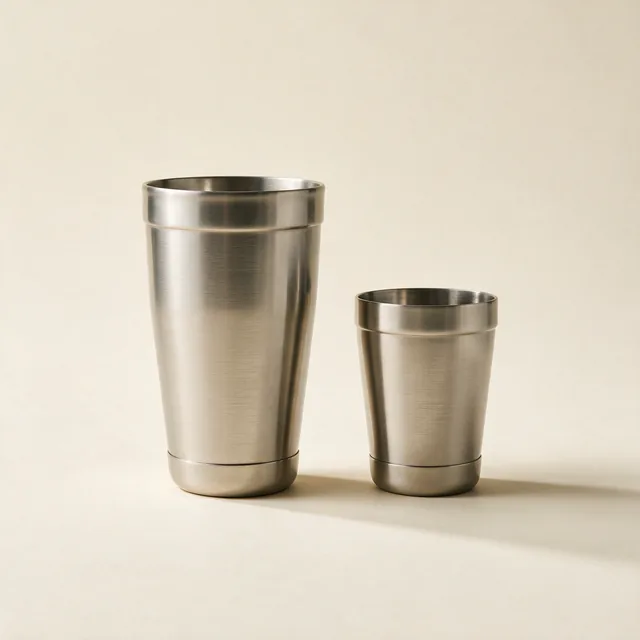
A weighted shaker set
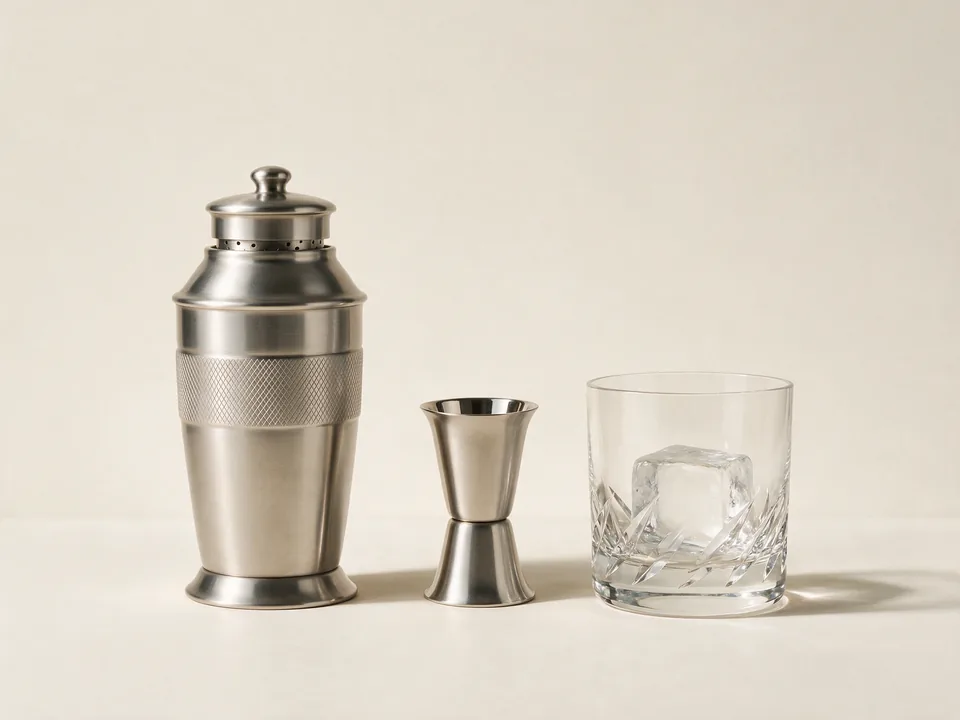
Two tins that seal properly beat a three-piece shaker that sticks and dribbles. This is the one tool worth spending on.
Some links on this page go to Amazon. If you buy through one we earn a small commission, at no extra cost to you. It never changes what we recommend or the order we put things in. Photographs here are illustrations of the kind of thing described, not pictures of a particular product.
Four things, not twelve.
Two tins that seal properly beat a three-piece shaker that sticks and dribbles. This is the one tool worth spending on.
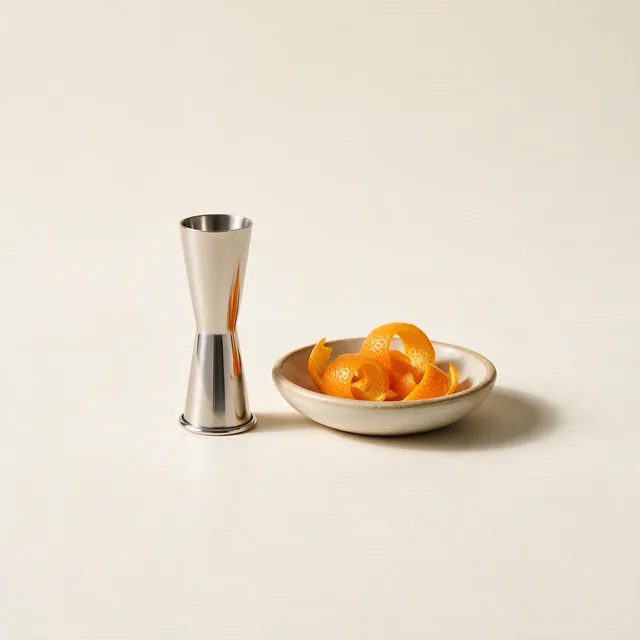
Cocktails are ratios and free-pouring ruins them. A japanese-style jigger with internal lines is accurate and pleasant to use.
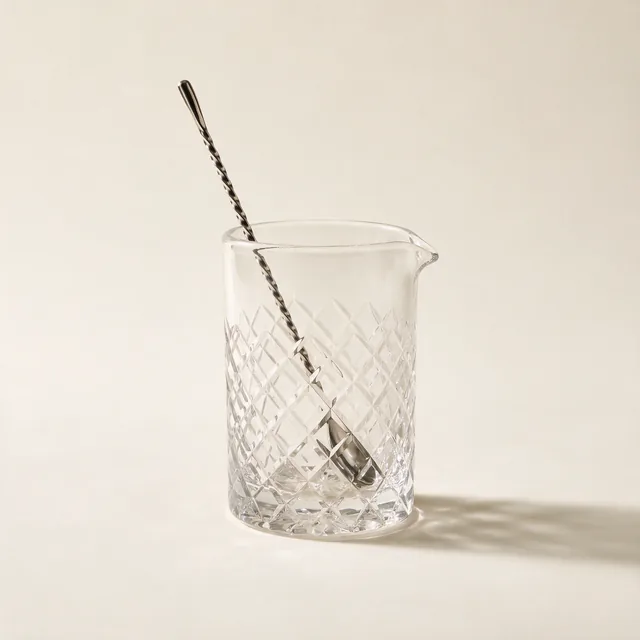
Stirred drinks need a heavy glass and a long spoon rather than a shaker. It is the difference between a clear martini and a cloudy one.
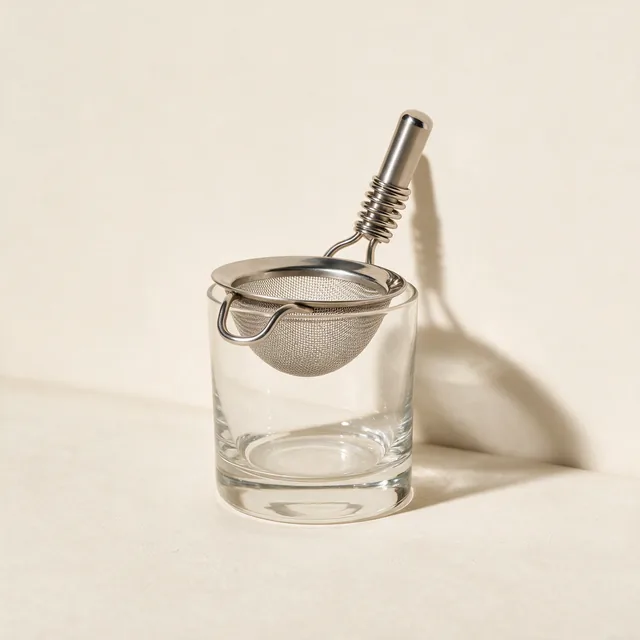
Catches ice shards and citrus pulp so the drink has the texture of one made properly. Cheap, small, and constantly used.
The two things people skip and then wonder why drinks taste different at home.
Directional freezing produces large clear cubes that melt slowly. It is the most visible improvement to a home drink and it costs very little.
Weight in the base changes how a drink feels entirely. Buy four of one kind rather than a mixed set of eight.
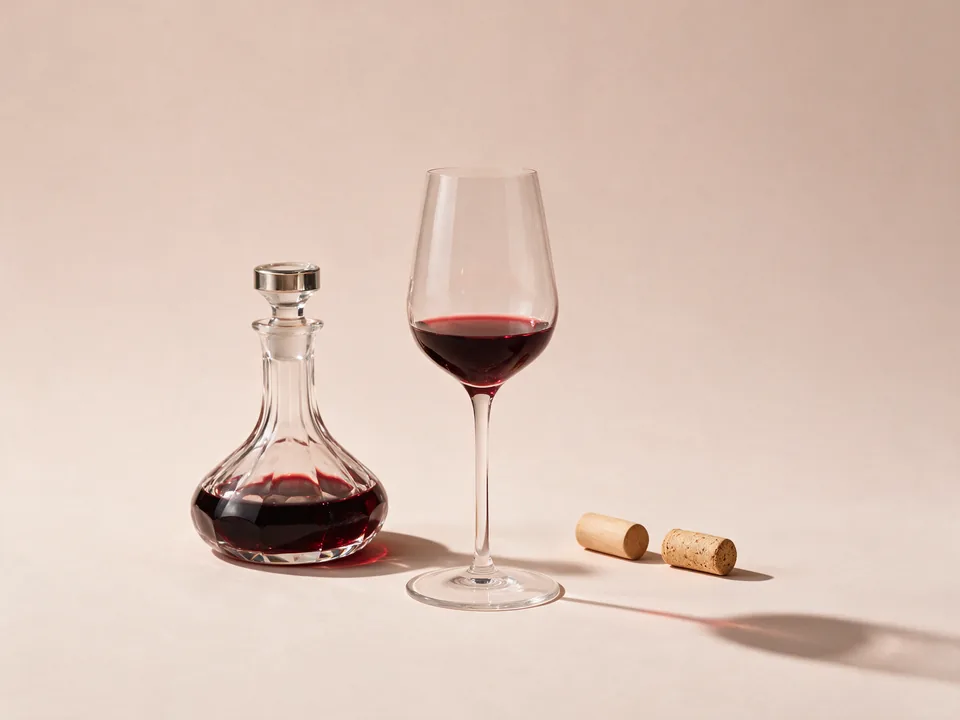
Stirred and shaken drinks are served without ice and need to stay cold. A stem keeps a hand off the bowl, which is the whole point.
Running out of ice ends the evening. An insulated bucket and a couple of large trays are boring and necessary.
Modifiers change more drinks than another bottle of gin.
Aromatic, orange and one unusual bottle. Bitters last for years, cost little, and transform drinks made from what they already own.
Vermouth is wine and it goes off within weeks of opening. A good bottle plus the knowledge that it lives in the fridge fixes many disappointing martinis.
Orgeat, ginger and a proper gum syrup open up a whole category of drinks. They are cheap and they get used up, which makes them repeatable as gifts.
One that teaches families of drinks rather than listing three hundred recipes. It is what turns a collection of bottles into a repertoire.
After the drink is made.
Contains the whole operation and makes it portable. It also stops rings on furniture.
Stone or cork rather than novelty. Small, used constantly, and usually terrible.
Fresh juice is most of what separates home drinks from good ones.
The unglamorous pair that make the counter workable.
The second and third of each, because one is always in the sink.
Bottles stored properly and visible. It turns a cupboard into a bar.
Only for someone already deep in it, and genuinely fun when they are.
Where the ratios that worked get written down. It becomes the house book.
Put in the date and see how long you have, and the last sensible day to order each kind of gift.
We'll remind you about a month ahead, which is enough time to order glassware that arrives unbroken and on time.
Home bars fail in a predictable way: a boxed set of twelve shiny tools, of which three are used and nine are drawer filler. The real kit is small, and the money is better spent on ice, glass and one good bottle.
Buying spirits for someone else is harder than it looks, because taste in whiskey or gin is personal and expensive to get wrong. Modifiers, bitters and syrups are much safer and they change more drinks.
Ice deserves the attention nobody gives it. Large clear cubes melt slowly and make a drink at home taste like a drink somewhere good, and the equipment costs very little.
A weighted shaker set, a jigger, a fine strainer and a clear ice mold. That is most of what a bar actually needs, and it costs far less than the twelve-piece sets sold as starter kits.
Only if you know their taste well. Preferences in whiskey, gin and rum are specific and bottles are expensive. Bitters, vermouth and syrups are safer, cheaper and improve every drink they already make.
Small cloudy cubes melt fast and water down a drink while it is being made. Large clear ice melts slowly, so the last mouthful tastes like the first, which is most of the difference between home and a good bar.
Boxed multi-tool sets, novelty glasses and gadgets for a single drink. Bartenders use a handful of tools repeatedly, and everything else takes up space in a drawer.