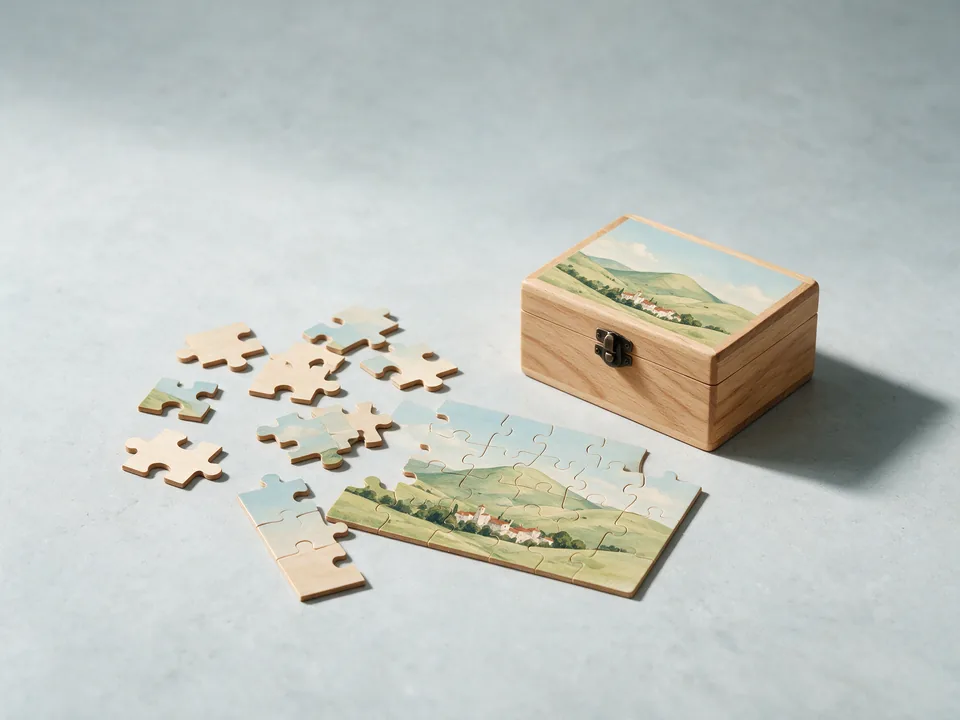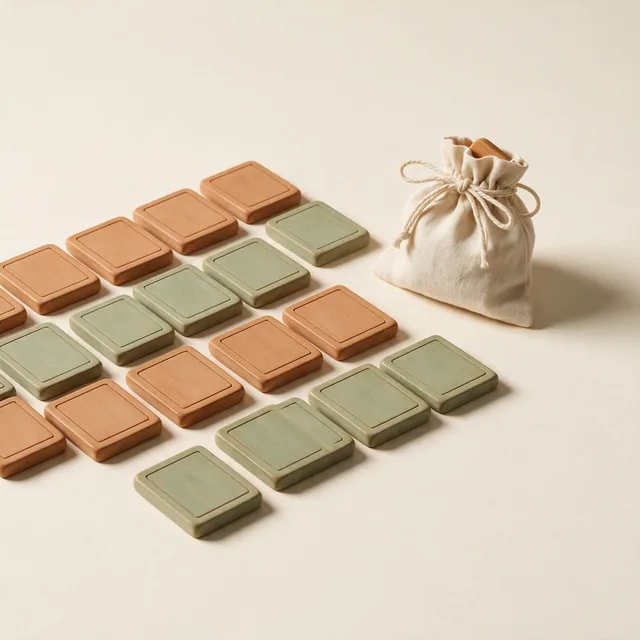
A tile-laying game for two to four
Simple to teach, different every time, and finished within an hour. This category is where most families find the game they keep returning to.
Some links on this page go to Amazon. If you buy through one we earn a small commission, at no extra cost to you. It never changes what we recommend or the order we put things in. Photographs here are illustrations of the kind of thing described, not pictures of a particular product.
Short rules, real decisions, and the whole table involved.
Simple to teach, different every time, and finished within an hour. This category is where most families find the game they keep returning to.

Everyone plays against the board rather than each other, which suits households where losing badly ends the evening. It also lets adults help without patronizing anyone.
Fits in a pocket, plays in fifteen minutes, and works with people who claim not to like board games. The most played gift on this page will often be the cheapest.
Most family games sag with only two players. Having one designed for two means it still gets played when the household is quiet.
The genuine constraint in most families.
Designs where younger players get a structural advantage keep everyone honest. It is much better than adults visibly going easy.
Steady hands are age-blind, so a six-year-old can genuinely beat an adult. These are the games that produce the most noise and the best memories.
Association and description games favor wit over vocabulary, which keeps them fair across ages and generations.
A game played across many evenings, with lasting changes. It suits families whose children are old enough to commit to something over months.
Small things that make game night happen more often.
Protects the table, quiets the dice, and marks the space as the game space. It also stops the endless argument about eating at the same table.
Cards wear out, and the ones in a favorite game wear out first. Sleeves are cheap and they double the life of something loved.
Keeps dice on the table and off the floor. It sounds trivial until you have crawled under a sofa mid-turn.
Insert trays or a proper shelf turn a leaning pile of boxes into something you can choose from. Games that are visible get played.
Making game night easy to start.
Games that are visible get played. Deep shelves are the constraint most homes have.
Setup time is the enemy of a weeknight game. Trays cut it in half.
Everyone can see. It sounds unnecessary until the first game with four players.
Small and always missing when a game starts.
For families who play a lot of card games, and for anyone with arthritis.
It keeps dice on the table and quiets the sound of them, which matters more with children in the house. It also folds flat into the box.
Small boxes for holidays and restaurants. It keeps the habit going away from home.
Ends the analysis paralysis that makes families give up on longer games.
Put in the date and see how long you have, and the last sensible day to order each kind of gift.
We'll remind you about a month ahead, which is enough time to find out how many people usually play.
The useful question is never which game is best. It is how many people play, how long they will sit still, and whether the youngest at the table can win without being let win.
Games that survive in a family have short rules and real decisions. A game explained in five minutes and played in forty gets played again next week; a three-hour epic gets played once and admired on the shelf.
Cooperative games are worth knowing about if a household has one competitive person and one who hates losing. Everyone against the board changes the temperature of a table completely.
Start with the number of players and the time they will sit for, not with reviews. A game that fits four people in forty minutes will be played dozens of times, while a longer game will be admired and left in the box.
Dexterity games, association word games and cooperative games. All three let a younger player compete honestly, which matters more than a recommended age printed on a box.
Yes, especially in households where losing sours the evening. Everyone plays against the board together, so helping is part of the game rather than condescension.
Buy for the gap rather than the collection: a two-player game, a fifteen-minute filler, or sleeves and inserts for the games they already play most.